
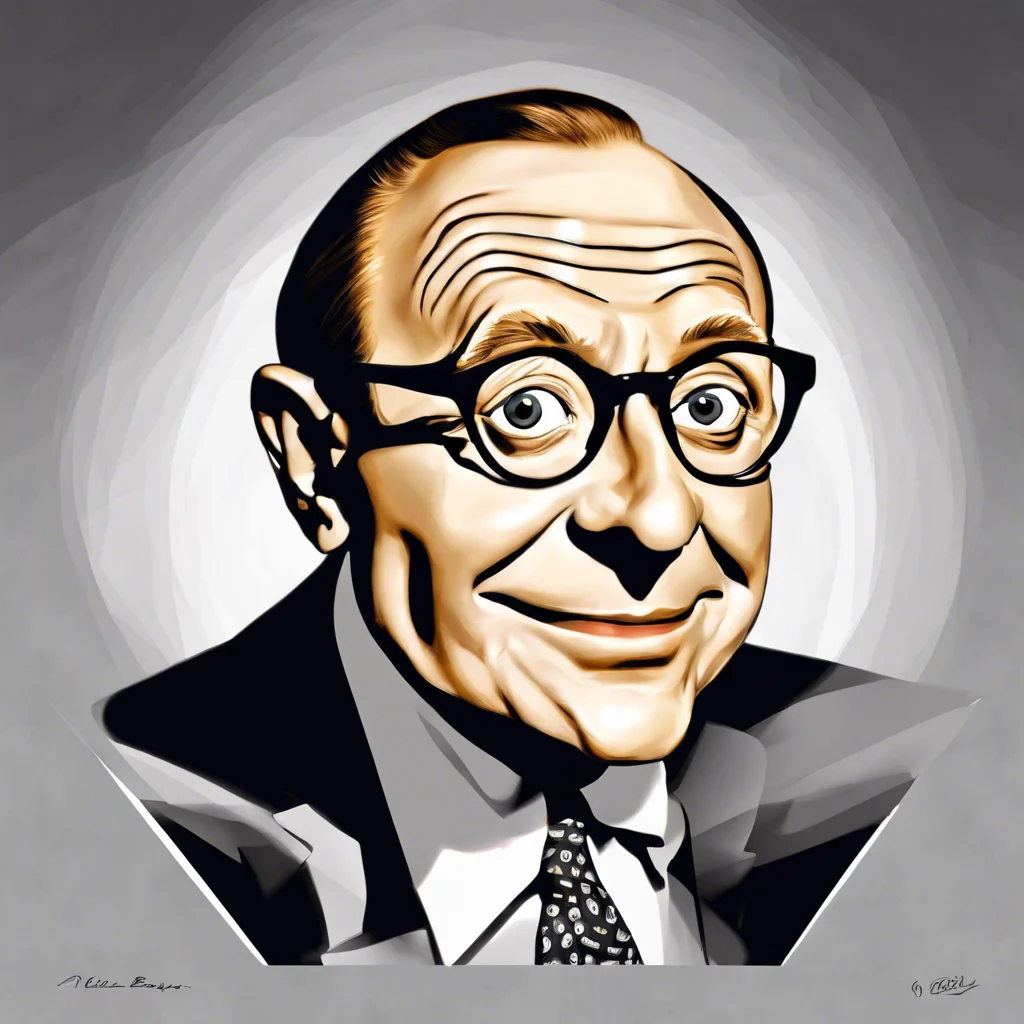
Jack Benny, born Benjamin Kubelsky on February 14, 1894, evolved from a modest vaudeville performer to one of the most beloved figures in American comedy. Known for his impeccable comic timing and unique brand of humor, Benny’s career spanned radio, television, and film, making him a household name across multiple generations. His talent for making audiences laugh with a simple pause or a perfectly timed look set him apart as a comedy legend.
In his early years, Benny’s life revolved around the violin, a passion that would later become a key element of his comedic persona. Though he often played the role of an inept musician for laughs, he was actually a skilled violinist.
His journey from vaudeville stages to the heights of Hollywood success is a fascinating tale of persistence and talent.
Benny’s ability to adapt and redefine his comedy across different media ensured his popularity for over three decades.
Benny’s iconic radio show, “The Jack Benny Program,” became a staple of American entertainment, seamlessly transitioning to television in later years.
His witty exchanges with a memorable cast of characters and his knack for self-deprecating humor endeared him to millions.
Even today, Jack Benny’s influence on comedy is evident, proving that his comedic brilliance transcends time.
For more about his life and career, you can explore his story on Wikipedia and Britannica.
Early Life and Background
Jack Benny, born Benjamin Kubelsky, grew up in the early 20th century in the bustling Midwest. His life was shaped by his family, the small town of Waukegan, Illinois, and his early love for music.
Family Roots
Benjamin Kubelsky was born on February 14, 1894, in Chicago, Illinois. His parents, Meyer Kubelsky and Emma Kubelsky, were Jewish immigrants. Meyer emigrated from Poland and initially worked as a saloon owner. Later, he became a haberdasher, signaling a shift in the family’s economic status.
Emma, née Sachs, was supportive of her son’s early interest in music. The family valued hard work and resilience, traits that would later define Jack Benny’s career. Despite financial challenges, they provided him with opportunities to explore his musical talents.
Waukegan, Illinois
The Kubelsky family moved to Waukegan, a small city north of Chicago, where Meyer established his business. Waukegan was a tight-knit community which offered a nurturing environment for young Benny.
Here, he attended Waukegan High School and briefly joined the school band in 1909.
Waukegan played a significant role in shaping his formative years. The town’s close-knit community and slower pace allowed Benny to develop his performing skills.
Growing up in a small town like Waukegan provided him with a relatable and humble background that resonated with audiences throughout his career.
Young Benny Kubelsky
At the age of six, young Benny Kubelsky began studying the violin, influenced by a neighbor named Otto Graham Sr. Although he was initially uninterested, he continued to practice, a skill that would later become integral to his comedy routines.
Benny was not particularly strong in academics and struggled with his studies.
Despite his academic challenges, Benny’s talent for playing the violin set him apart. His parents’ support and the encouragement from his community helped him persevere.
This early exposure to music and performance planted the seeds for what would become a legendary career in entertainment.
Vaudeville Beginnings
Jack Benny’s career began with early performances in vaudeville. In this stage of his life, he transitioned from playing the violin to focusing on comedy. His vaudeville acts set the foundation for his later success in radio and television.
First Steps in Show Business
Jack Benny, born Benjamin Kubelsky, started playing the violin at age six. His neighbor, Otto Graham Sr., was his first teacher. Despite being highly skilled, Benny often joked about his so-called “ineptness” on the violin. This self-deprecating humor became a hallmark of his later performances.
Benny’s first professional break came when he joined the vaudeville circuit. He initially partnered with pianist Cora Salisbury, and the duo was known for their musical comedy performances.
After two years in the Navy, Benny created a solo act, “Ben K. Benny: Fiddle Funology.” He was encouraged to quit school and dive fully into show business.
In 1921, Benny began focusing more on comedy, eliminating much of the music from his act. He changed his stage name to Jack Benny and his show became known as “Jack Benny: Aristocrat of Humor.” This shift towards comedic performance set the stage for his future career in radio and television.
Meeting Mary Livingstone
Jack Benny’s life took a significant turn when he met Mary Livingstone. He was performing in Vancouver when his friend Zeppo Marx introduced him to Sadye Marks, who would later become Mary Livingstone.
Mary’s wit and charm impressed Benny immediately. The two quickly bonded and eventually married in 1927.
Mary often participated in Benny’s acts, playing his on-air foil, adding another layer to his comedy.
Her involvement in his career played a crucial role in his successful transitions from vaudeville to radio and television.
Their partnership, both personal and professional, became one of the most iconic duos in entertainment history. This key relationship enriched Jack Benny’s career, making it more dynamic and endearing to audiences.
Related Posts
Remembering M*A*S*H: A Look Back At The Greatest TV Show
Gene Wilder: A Look Back at the Iconic Actor
Dick Van Patten’s Life And Career: Actor To Pet Advocate
Tom Bosley’s Life And Career: More Than Just Happy Days
Mel Blanc: The Amazing Voice Behind Your Favorite Characters
Radio and Television Stardom
Jack Benny became a beloved figure in American entertainment through his successful radio show and his smooth transition to television. His comedic style and memorable characters left a lasting impact on both mediums.
The Jack Benny Program
Jack Benny’s radio success began with The Jack Benny Program, which aired from 1932 to 1955. His unique humor and precise timing delighted listeners.
The show featured an ensemble cast including his wife, Mary Livingstone, and characters like Rochester, his valet.
Benny’s knack for self-deprecating humor and running gags, like his stinginess and perpetually being 39 years old, became trademarks.
Don Wilson served as the announcer, adding to the charm of the program.
Music from the orchestra, led by Phil Harris and later by others, provided a lively atmosphere. Benny’s interplay with Dennis Day, who played a singer with a good-natured yet dim-witted persona, further enlivened the show.
Transition to Television
In 1950, Jack Benny made a seamless move to television, bringing his radio program’s magic to the new medium.
The TV version of The Jack Benny Program ran until 1965 and retained many of the same characters and humor.
The show was known for its innovativeness, including breaking the fourth wall and interacting with the audience.
Benny’s partnerships with CBS and NBC helped make his television program a hit. His TV show continued the comedic legacy established on the radio, ensuring a loyal following.
The transition highlighted his versatility and cemented his status as one of TV’s early stars.
Jack Benny’s Humor and Character
Jack Benny’s humor was defined by his impeccable timing and memorable character, which became iconic in American comedy. His signature style and recurring gags with famous comedians like Mel Blanc and Bob Hope further solidified his place in entertainment history.
Signature Comedy Style
Jack Benny had a unique comedic style that relied heavily on timing and subtlety. His persona was known for being stingy, often joking about money, which became a staple in his act.
This frugality joke was complemented with his violinist character, who could play but was often humorously mocked for his lack of skill.
He could cause laughter with just a pause or a raised eyebrow, showcasing his masterful timing. Unlike many comedians who relied on fast-paced dialogue, Benny’s slow, deliberate delivery kept the audience anticipating his next move.
His ability to stand still and simply react to situations around him made his character compelling and endearing.
Recurring Gags and Characters
Jack Benny’s comedy was filled with running gags and recurring characters that became beloved by his audience.
One of the most famous running gags involved Mel Blanc, who voiced various characters on Benny’s radio show. Blanc’s role as Benny’s perpetually annoyed violin teacher created some of the most memorable moments.
Another notable gag was Benny’s interactions with Bob Hope, which highlighted his fictitious stinginess and love for money.
These skits often depicted Benny negotiating deals or complaining about expenses, generating laughs from the exaggerated scenarios.
His recurring characters included his on-air persona’s butler, Rochester, who provided a humorous counterbalance to Benny’s character. Rochester often showcased a witty and sarcastic banter that added depth and humor to the show.
Cinematic Endeavors
Jack Benny’s film career showcased his versatility beyond the radio and television that made him famous. His role in “To Be or Not to Be” is particularly notable for its critical acclaim.
Film Career Highlights
Jack Benny began his journey in the film industry during the 1920s, although his major successes came later.
He worked with MGM and other major studios, bringing his unique comedic touch to the big screen.
One significant movie was “Buck Benny Rides Again”, where he parodied his own popular radio persona. This film blended Western tropes with Benny’s signature humor, making it a hit with audiences.
Jack often collaborated with his friend Fred Allen in various projects, translating their famous radio feud into movie scripts.
These films were a mix of comedy and light hearted stories that resonated well with movie-goers of the era.
Many of Benny’s film works were extensions of his radio and TV performances. He often played exaggerated versions of himself, which kept fans coming back for more.
‘To Be or Not to Be’ and Critical Acclaim
In 1942, Jack Benny starred in “To Be or Not to Be”, a dark comedy directed by Ernst Lubitsch. The film, set during World War II, showcased Benny’s range as an actor.
He played “Joseph Tura,” a Polish actor who ends up embroiled in a plot to resist the Nazis. Benny’s role balanced humor and drama, demonstrating his ability to handle serious material while still delivering his comedic timing.
Critics praised his performance, noting it as one of his finest. Despite its controversial subject matter, the movie became a critical success. It is often listed among the greatest comedies of its time. It solidified Benny’s status not just as a radio and TV star, but also as a significant figure in the golden age of cinema.
Personal Life
Jack Benny’s private life was as interesting as his career. He shared a loving marriage with Mary Livingston and had several hobbies and interests that he pursued offstage.
Marriage to Mary Livingston
Jack Benny married Mary Livingston, born Sadie Marks, in 1927. They met while working in vaudeville. Their marriage was a long and happy one, lasting more than 40 years until Benny’s death. Mary often appeared on Jack’s radio and television shows, where her comic timing and sharp wit made her a fan favorite. They had one adopted daughter, Joan Benny, who sometimes joined them in their public appearances. The Bennys made their home in Beverly Hills, California, where they enjoyed a close-knit family life and entertained many friends from the entertainment industry.
Off-Stage Interests
Offstage, Jack Benny had a variety of interests. One of his most well-known hobbies was playing the violin, which he started learning at a young age in Waukegan, Illinois. Although he often joked about his poor playing skills, he was actually quite accomplished.
Jack was also a dedicated philanthropist, supporting numerous charitable causes throughout his life. He was an avid golfer and spent much of his free time on the golf course. His sense of humor and love for his family and friends made him beloved both on and off the stage. His home in Los Angeles reflected his passions, filled with memorabilia and reminders of his successful career and fulfilling personal life.
Friendships and Collaborations
Jack Benny was known for his strong friendships and collaborations with other entertainers. These relationships often influenced his comedic style and led to memorable performances that are still appreciated today.
Comedic Influences and Peers
Jack Benny’s comedic style was greatly shaped by his peers. He had close friendships with George Burns and Gracie Allen. Together, they often appeared on each other’s shows, bringing their unique comedic talents to blends that thrilled audiences. Their humor was complementary; Burns’ dry wit and Allen’s playful innocence matched Benny’s well-timed jokes.
He also collaborated with Phil Harris, a regular on his radio show. Harris, known for his cheerful personality and musical talent, added a dynamic element to Benny’s performances. The playful banter between them became a staple of his radio show.
Jack Benny admired the work of the Marx Brothers. Their influence on his style is evident in the way Benny delivered his jokes—often with a straight face, letting the humor speak for itself. These interactions not only helped Benny to refine his comedic acts but also allowed for enriching experiences that benefitted his audience.
Work With Mel Blanc and Others
One of Jack Benny’s most famous collaborations was with Mel Blanc, the voice behind many iconic cartoon characters. Blanc played a variety of roles on Benny’s show, including the unforgettable sound of Benny’s perpetually clunky car, the Maxwell, adding a distinct auditory humor to their skits.
Blanc’s versatility helped bring to life multiple characters in Benny’s universe, from the frustrated violin teacher Professor LeBlanc to the loud, obnoxious bus driver. These contributions made the show more colorful and engaging for the listeners.
In addition to Blanc, Benny often worked with Eddie Anderson. Anderson’s portrayal of Benny’s loyal but sarcastic valet, Rochester, stood out for its humor and wit. Their on-air chemistry translated into a real-life friendship that was strong and inspiring.
Final Years and Tribute
Jack Benny’s later years were marked by illness, but also by moments of celebration and remembrance. Diagnosed with pancreatic cancer, he spent his final days at home, surrounded by loved ones. After his passing, his impact on comedy and entertainment was honored through various tributes and memorials.
The Farewell Show
In October 1974, Benny canceled a performance in Dallas due to health issues. He experienced dizziness and numbness in his arms. Despite multiple tests, doctors could not initially identify his condition. By early December, further tests confirmed he had inoperable pancreatic cancer. Opting to stay at home, Jack Benny passed away on December 26, 1974, at the age of 80.
His funeral gathered many prominent figures in the entertainment industry. Frank Sinatra and Johnny Carson were notable attendees. Carson delivered a heartfelt eulogy, sharing personal anecdotes and highlighting Benny’s immense influence on comedy. It was a touching farewell to a beloved entertainer.
Legacy and Memorials
Jack Benny’s legacy endures through numerous tributes. HBO aired a special titled “Jack Benny: Comedy in Bloom” narrated by Tom Smothers, celebrating his life and career.
He is famously remembered for his running gag of being eternally 39. This joke continued to endear him to fans even after his death.
Every year on Valentine’s Day, a long-stemmed red rose is delivered to his widow, Mary Livingstone, as per his instructions. This gesture symbolizes his lasting love and the affection he earned from his audience.
Benny’s contributions to radio, television, and comedy have cemented his place as a key figure in American entertainment history. With numerous memorials and ongoing tributes, his influence is still felt today.
